
CCPF Platform
Primary Prevention of Methane Slip
Target Audience
- Oil & gas operators
- Production fields
- Crude oil treatment heaters
- Gas turbine installations
- Gas engine systems
- Associated petroleum gas (APG) utilization systems
The Challenge
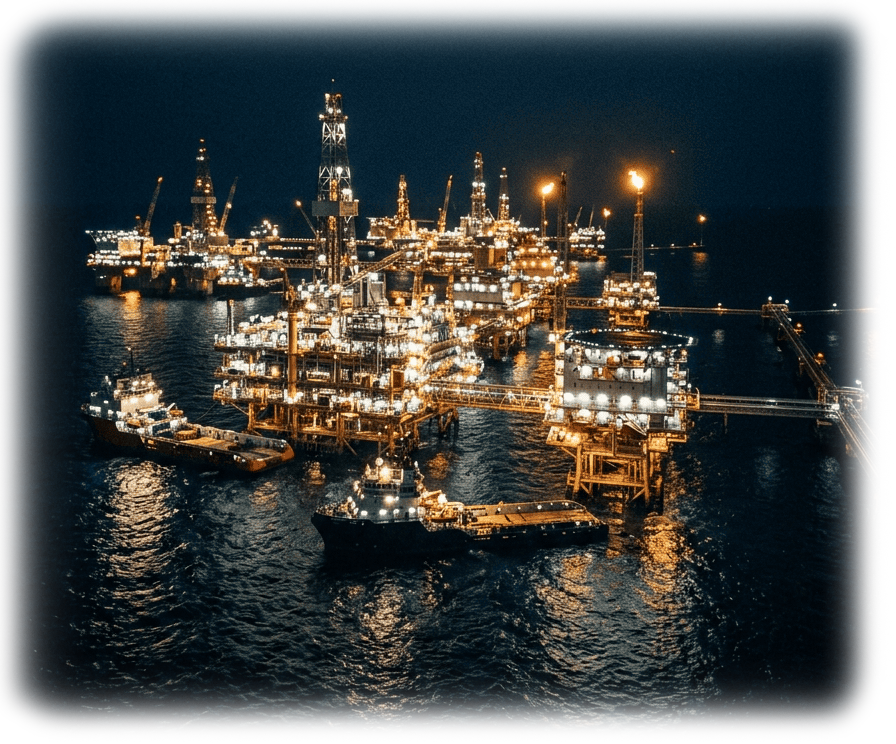
During the combustion of associated petroleum gas,
a portion of methane does not fully participate in the combustion process.
Methane slip becomes:
- A climate-related concern
- A regulatory compliance issue
- A source of penalties and energy losses
At the same time, secondary solutions operate only after
emissions have already been formed and do not address the root cause.
CCPF does not replace thermal oxidation or gas treatment systems.
It reduces the load on downstream systems by preventing methane slip
during the combustion stage.
What MiaNOx Does
CCPF controls combustion within the flame formation zone by stabilizing the flame front and methane oxidation radical-chain reactions.
This prevents methane slip during combustion — before methane leaves the system as an emission.
Benefits for Operators
- CH₄ reduction of up to 98%
- NOx reduction of 40–70%
- CO reduction of up to 70%
- PM reduction by up to 5 times
- Coke and deposit formation reduction of up to 95%
- Fuel savings of 3–8%
- Reduced penalties and ESG-related risks
System-Wide Effect
- Reduced energy losses during APG combustion
- Improved equipment efficiency
- Reduced load on emission control and thermal oxidation systems
- Increased combustion stability
- Improved environmental reporting
- Enhanced production profitability
Applications
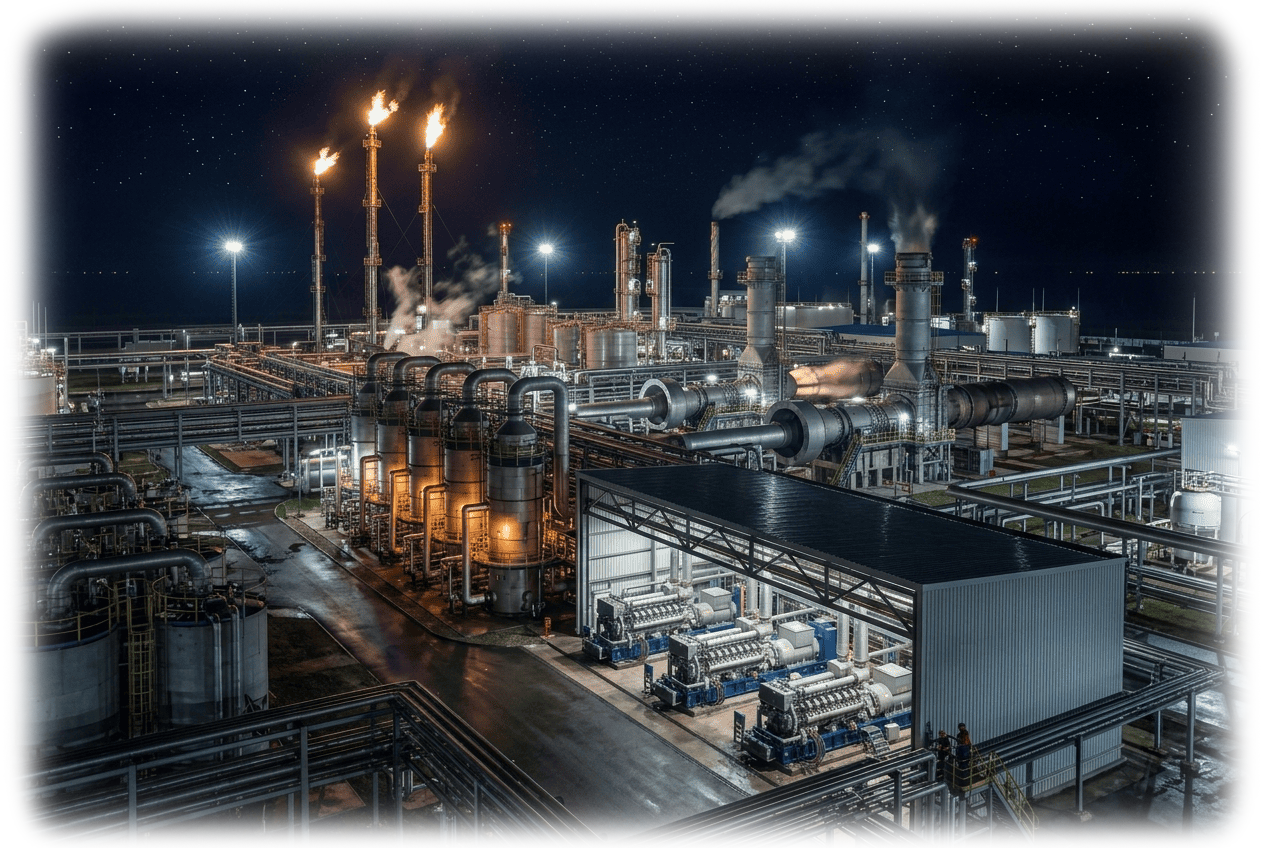
- Flares
- Crude oil treatment heaters
- Gas turbine installations
- Gas engine systems
- Associated gas utilization systems
Operational Model
Conventional Operation:
Unstable Combustion Methane Slip Energy Losses Regulatory Penalties
With CCPF:
Stable Combustion Methane Utilization Lower Emissions Higher Efficiency
Short Formula
Less CH₄ Lower Losses Reduced Penalties Higher Efficiency
BAT Compliance
CCPF aligns with BAT principles as a primary methane slip prevention technology operating within the combustion zone and reducing the load on downstream emission control and thermal oxidation systems.
The technology operates within the flame formation zone
and prevents methane slip before gas exits the system as an emission,
without equipment modernization.