
LNC PLATFORM
LNC Platform
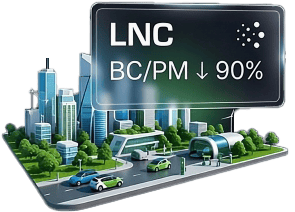
Primary Black Carbon and PM
Prevention Technology
Key Performance Indicators
- Black Carbon ≥ 90%
- PM ≥ 90%
-
Reduced load
on DPF / GPF / SCR systems
System-Wide Effect
- Reduced backpressure
- Reduced regeneration frequency
- Reduced thermal load
-
Reduced operating expenditure
(OPEX)
The technology does not replace emission control systems.
It reduces the load placed upon them by preventing
pollutant formation within the combustion chamber.
LNC is a technology platform for primary combustion control that prevents the formation of Black Carbon and Particulate Matter (PM) within the combustion chamber.
The technology operates during the flame formation stage — before pollutants enter DPF, GPF, and SCR systems — reducing pollutant formation at the source rather than treating emissions after they are created.
Through combustion thermochemistry control and radical-chain reaction management, LNC prevents the transition of carbon into a solid particulate phase and stabilizes the fuel oxidation process.
LNC for Refineries & Mini-Refineries
Refineries and Mini-Refineries:
Fuel as a Technology Product
Target Audience
- Refineries and mini-refineries
- Fuel traders
- Export fuel suppliers
- Corporate fuel contract providers
The Challenge
The fuel market is increasingly becoming a commodity market.
Competition based solely on price and regulatory fuel grade
limits margin growth.
At the same time, end users demand:
- Lower fuel consumption
- Reduced exhaust emissions
- More reliable equipment operation

The technology operates at the point of final fuel utilization —
inside the combustion chamber
CONVENTIONAL APPROACH
- Fuel remains a commodity product
- Competition is based on price and regulatory grade
WITH LNC
- Combustion is controlled inside the combustion chamber
- Pollutant formation is reduced at the source
- The fuel oxidation process is stabilized
- Fuel delivers measurable operational benefits
Refineries need to create products with measurable
operational and environmental benefits.
What MiaNOx Does
MiaNOx LNC integrates into fuel infrastructure:
- During blending operations
- In storage tank farms
- At fuel terminals
- Through inline dosing systems
The technology operates at the point of final fuel utilization — inside the combustion chamber — without changing the regulatory fuel grade and without requiring refinery reconstruction.


Benefits for Refineries
- Development of premium gasoline and diesel product lines
- Increased margins without production modernization
- Export differentiation
- Stronger ESG positioning
- Reduced customer claims and complaints
- Entry into corporate fuel contract markets
-
Creation of dedicated fuel product lines for:
92 / 95 gasoline / diesel / industrial diesel / marine fuel
System-Wide Effect
- Fuel becomes a tool for managing customer OPEX
- Additional value is created at the commercialization stage
- Technology scales from refinery to end user
- A unified chain is established: Production Distribution Operation
Dosing
Gasoline
Infrastructure application — fuel stations / terminals / blending:
180–830 ppm
Diesel
Industrial / infrastructure application: 50–100 ppm
Transportation and operational use: 250–550 ppm
depending on fuel quality and operating conditions
The technology does not change the regulatory fuel grade and integrates without refinery reconstruction.