
LNC Marine
Primary Combustion Control for Marine Diesel Engines
Target Audience
- Commercial shipping fleets
- Port operators
- Bunkering infrastructure providers
- Vessels operating in environmentally sensitive regions
The Challenge
The marine sector is facing increasing pressure from:
- Stricter emission regulations
- Port entry restrictions
- Growing carbon reporting requirements
- High costs associated with downtime and regulatory non-compliance
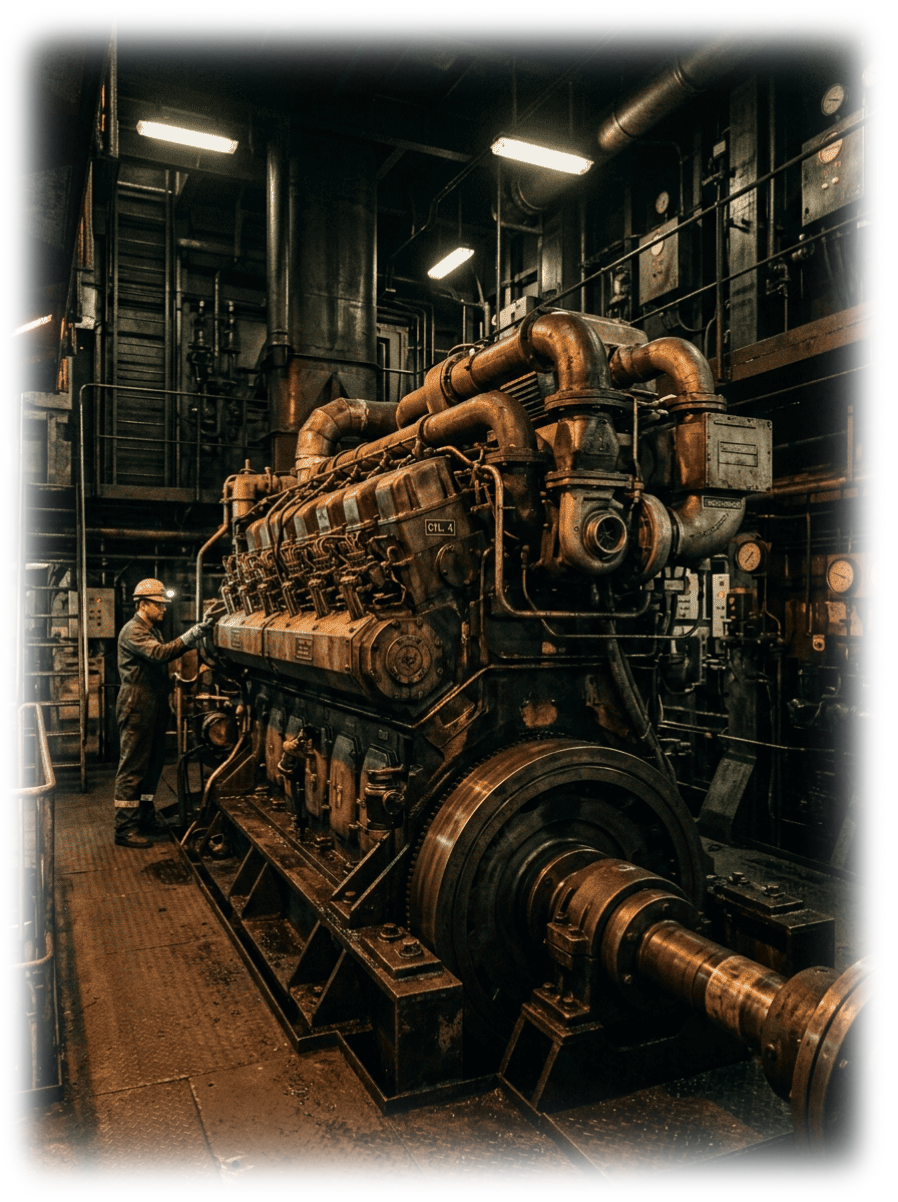
At the same time, pollutants are generated during combustion,
while emission control systems — including scrubbers — operate
only after pollutants have already been formed.
What MiaNOx Does
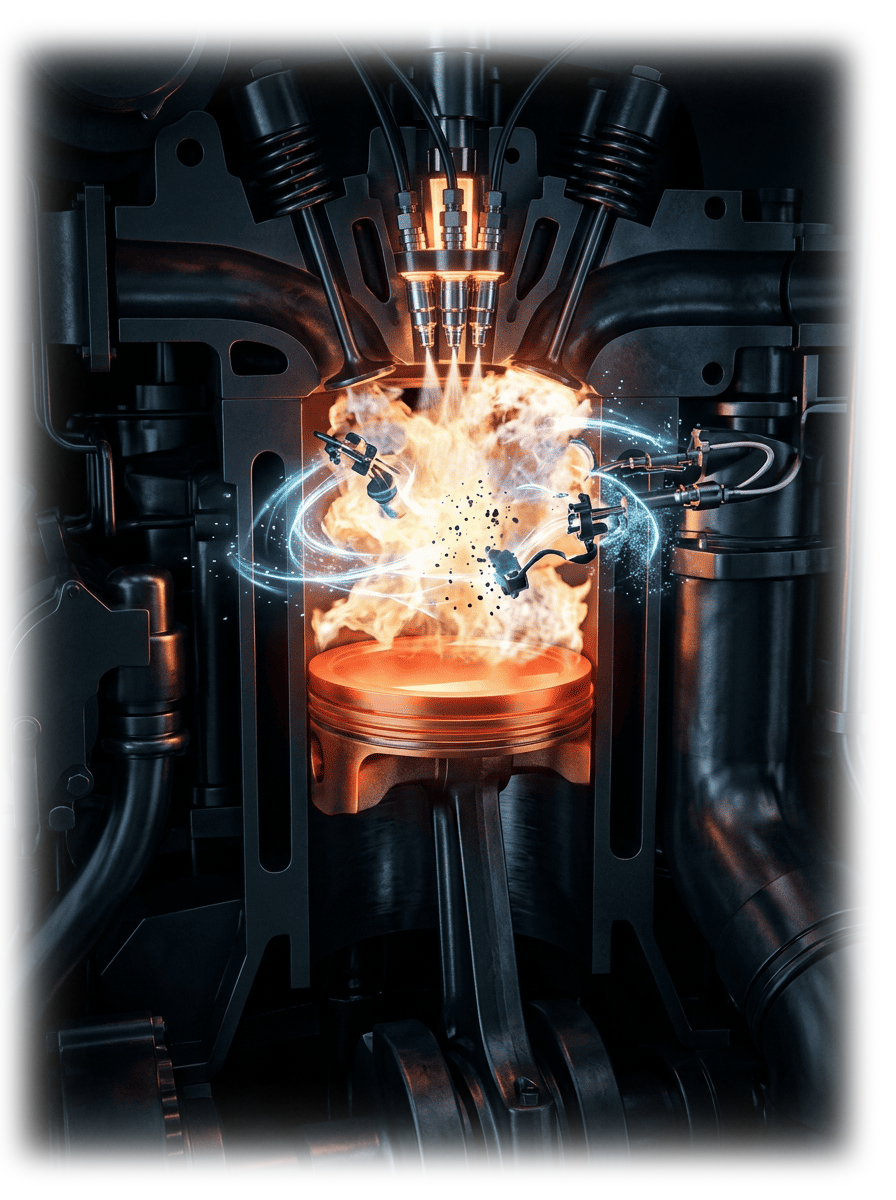
- MiaNOx LNC Marine controls the combustion process within marine diesel engines, preventing the formation of Particulate Matter (PM) and Black Carbon during the combustion stage.
- The technology operates before pollutants enter the exhaust stream, reducing the load on emission control systems and stabilizing combustion performance under real operating conditions.
Benefits for Vessel Operators
- PM reduction ≥ 90%
- Black Carbon reduction ≥ 90%
- Fuel consumption reduction starting from 4%
- Reduced visible smoke emissions
- Reduced load on exhaust treatment systems
- Reduced risk of port access restrictions
- Improved resilience to regulatory requirements
-
Support for compliance with:
IMO MARPOL Annex VI / CII / EEXI / EU ETS / FuelEU Maritime
System-Wide Effect
- Reduced environmental risks and regulatory penalties
- Improved operational predictability
- Reduced load on onboard systems
- Seamless integration into existing bunkering infrastructure
Integration Methods
- Through bunkering operations
- In fuel storage tanks
- Through inline dosing systems
- Through onboard fuel management systems

Applications
- Ocean-going and inland waterway vessels
- Port operations
- Vessels operating under strict environmental regulations
- High-utilization commercial fleets
Operational Model
Conventional Operation:
Soot Formation Smoke Emissions Increased System Load Compliance Risk
With MiaNOx:
Reduced PM Formation Stable Combustion Lower Load Improved Regulatory Compliance
Short Formula
Less PM Less Smoke Lower Load Better Compliance
Scrubbers and Emission Control Systems:
Pollutants are formed
Exhaust gases are treated
Additional operational costs
MiaNOx Approach:
Combustion is controlled at the source
Pollutant formation is prevented
Reduced load on scrubbers and emission control systems
The technology operates inside the combustion chamber and reduces
the load on exhaust treatment
and emission control systems without modification of marine
propulsion systems.